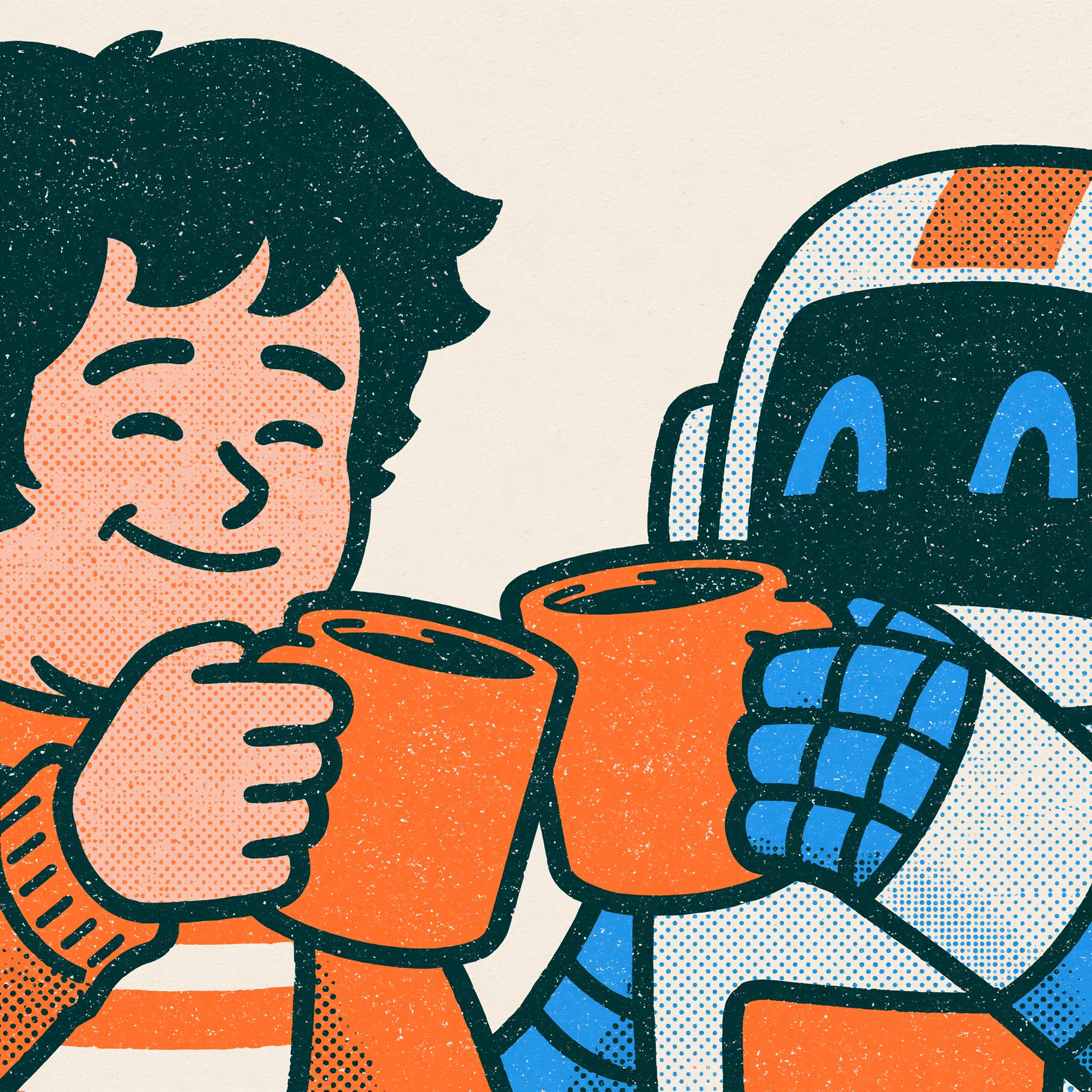
This is a short series about living alongside AI, built on one question: how much of it is actually in your hands? The good and the bad laid out as straight as I can manage, so you walk away able to make your own choice instead of having mine handed to you.
The first series, Artificial Intelligence 101, was about seeing AI clearly, what it is, where it came from, why it behaves the way it does. This one is the reckoning it kept pointing at. It takes what you now understand about the technology and asks the harder question, what does living with it actually cost, and actually give. One series teaches the mechanics. This one weighs what they mean for you.
Goals
WHAT'S IN YOUR HANDS
The first four pieces cover the part you control, how you use it, how honestly, whether you keep your own mind, and what you let it get close to. Your control there runs deep and most people never spend half of it.
WHAT ISN'T
Then the forces moving around your choice, work shifting under everyone at once, the feed steering your attention, the machines passing verdicts on you, and the costs nobody sends you a bill for.
BOTH SIDES, STRAIGHT
I am not selling you the future and I am not warning you off it. The whole point is to grant both sides their due. Real value, real cost, named plainly, so you can weigh them yourself.
YOUR CALL
Ten short pieces, read in order, each one building on the last. It closes not with my verdict but with yours, because that was always the part that was going to be up to you.
Who is this for. You are living alongside AI already, whether you chose to or not. It is in your work, your feed, the decisions made about you. This series follows one question the whole way, how much of that is actually in your hands. It opens on the part that is, and the largest part at that. Then it widens out to the parts that are not. And it ends on the one thing that stays yours no matter how much of the rest you cannot control, which is where you choose to stand.
Ten pieces
01
The AI Mindset
Thinking in workflows and possibilities instead of questions, and why the mindset, not the tool, decides what you get.
I use these tools hard and I keep a running argument with myself about it. I draw lines, I move them when I learn something, I try to stay awake to the cost even when the convenience is seductive, and I refuse to pretend the parts I benefit from are clean just because they are useful to me. That is not a conclusion. It is a way of standing, and it is available to you at whatever conclusion you reach.