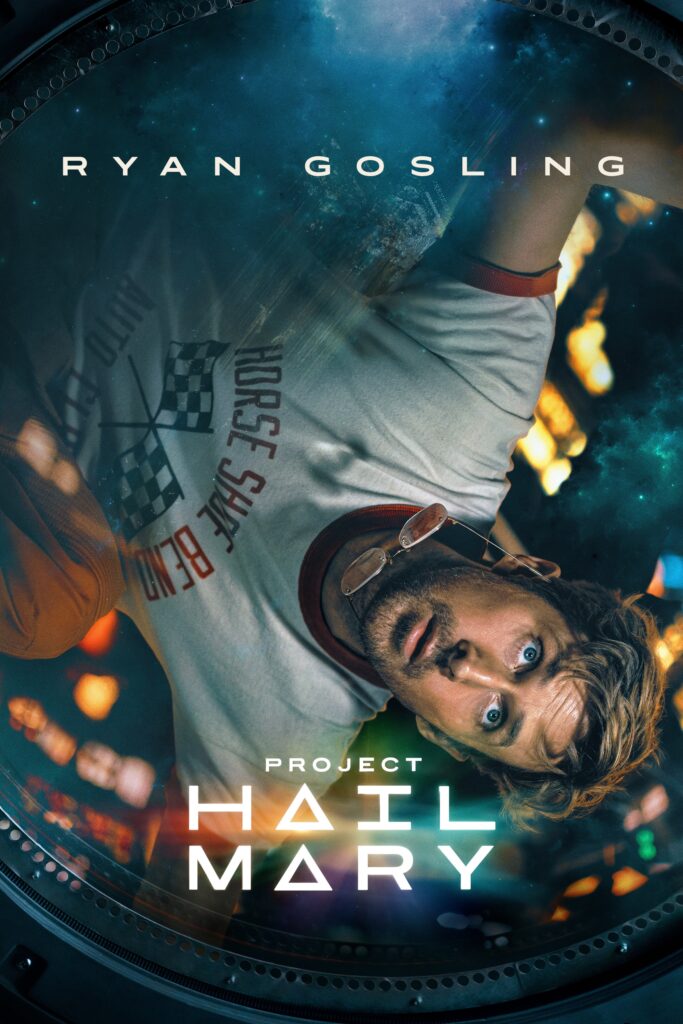
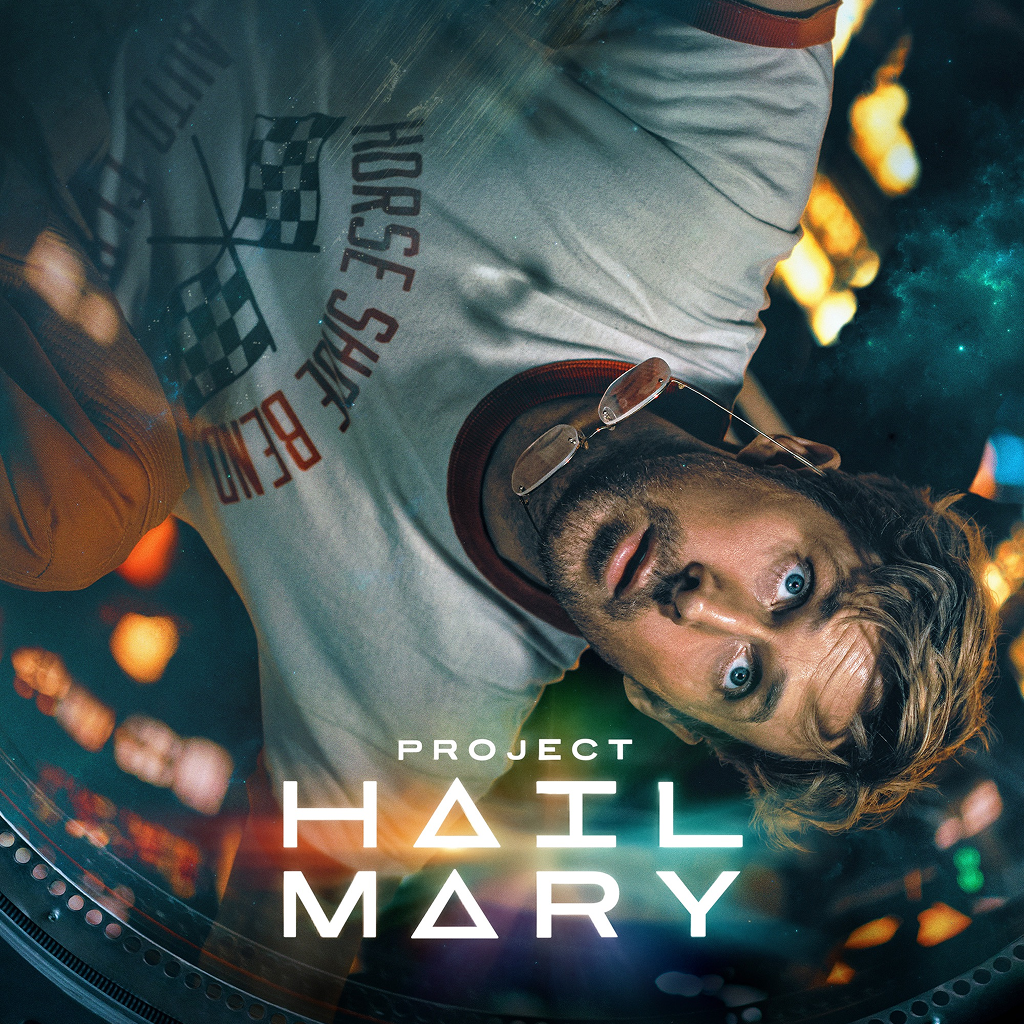
Phil Lord and Christopher Miller take Andy Weir’s survival novel and quietly shape it into one of the most visually sacred blockbusters in recent memory. The cinematography treats science like religion, the score gives the film a sonic identity that follows you home, and a faceless alien puppet delivers the most genuinely affecting performance of the year.
Something is different here
You can feel it within the first ten minutes. The premise is familiar enough, a man wakes up alone on a ship, the planet is dying, he has to find a cure, and any other production would have settled comfortably into that formula. This one doesn’t.
The difference is in how the camera sees things. The cinematography treats ordinary Earth, a lab bench, a classroom, a rocket on a launch pad, with the kind of warm, glowing reverence you’d normally associate with a cathedral. The color grading shifts flashbacks into something dreamlike and slightly unreal, as if Grace’s memories are paintings of a world he’s not sure still exists. Technology becomes beautiful. Science becomes sacred.
This is the film’s entire argument made visible. The mundane things, sunlight on a hallway floor, students raising their hands, become the most precious things in existence. Every ethereal, stained-glass shot is the movie whispering: look at what we’re about to lose. By the time the space effects arrive, the Astrophage migration line, the alien surface of Adrian, the sheer empty black of Tau Ceti, they carry a weight that pure spectacle never could.
The friendship that takes over
And then there is Rocky. A five-legged, sightless, spider-like alien with absolutely no face, communicating through musical chords, breathing superheated ammonia. He should not work as an emotional anchor for a major studio film. Yet James Ortiz’s vocal performance and the effects team’s restraint turn him into the most lovable character of the year. Rocky is not cute in a focus-grouped way. He is strange and slightly unsettling and completely wonderful, and the VFX understands that believability matters more than charm.
Their first encounter is staged like a horror sequence, every metallic creak mixed to maximize unease. The sound design is borderline terrifying, and it earns the friendship that follows because you felt the danger first. Watching hostility melt into curiosity, then cooperation, then genuine love is the single most rewarding arc the film offers. The score shifts with it, moving from tense isolation into something warmer and more distinctive than the generic orchestral wash that drowns most blockbusters.
Ryan Gosling makes the whole thing feel completely real opposite a green screen. That said, he never fully disappears. He is still operating inside the Gosling persona, and Grace occasionally feels more like a vehicle for that natural charm than an independent character. Sandra Hüller does something quietly brilliant with Eva Stratt, cracking open a character the book wrote as cold steel. Her arc with Grace detonates during a sequence set to Harry Styles’ “Sign of the Times.” On paper it feels like a reach. In practice, it is devastatingly precise. The world is ending. Someone still has to find the strength to try.
The hero who never wanted to be one
The non-linear structure does more work than you initially realize. Two timelines run in parallel, and the screenplay uses them to actively shift the meaning of what you’re watching. What looks like determination in one scene reads as desperation after the next reveal.
And then the critical flashback arrives. Grace was never supposed to be on this ship. He was a coward. He begged not to go. Stratt had him drugged and forcibly loaded aboard. His amnesia was not a medical side effect, it was his own mind hiding the truth from itself.
This should be the most devastating beat in the film. It reframes everything. But by the time it lands, Plot A has already given the audience its cathartic high, Rocky waking up, the cure working, the survival crisis resolved. The emotional release happened too early, and the cowardice twist arrives into a room that has already exhaled. A stumble inherited from the source novel, which had far more breathing room.
The Rocky bromance is the film’s greatest asset and its most limiting factor simultaneously. Once it takes center stage, the tonal range narrows. The goofiness is deeply lovable but functions like training wheels on a story that earned enough credibility to ride without them. Grace’s final sacrifice, turning the ship around to save his friend instead of going home, should destroy you. It lands. But it could have shattered you if the preceding hour hadn’t softened every sharp edge so carefully. The dialogue too is sometimes a touch too cheeky for a story about literal extinction, sanding down scenes that deserved to cut deeper.
Why it still matters
Sitting in the credits, watching Grace, older now, teaching a classroom of little Eridian children who raise their mechanical arms to answer his questions, none of those critiques feel like they matter much.
The film made hope feel earned. Not saccharine, superhero-landing hope. The real, exhausting kind that costs you everything and requires you to choose it anyway despite being terrified. Grace killed the coward he used to be. The universe, for once, rewarded that.
This is a film worth seeing on the biggest screen you can find. And the thing it is actually about, that heroism is not the absence of fear but the decision to act while completely full of it, hits differently right now. In a world running low on reasons to stay hopeful, Project Hail Mary hands you one and dares you not to feel something.